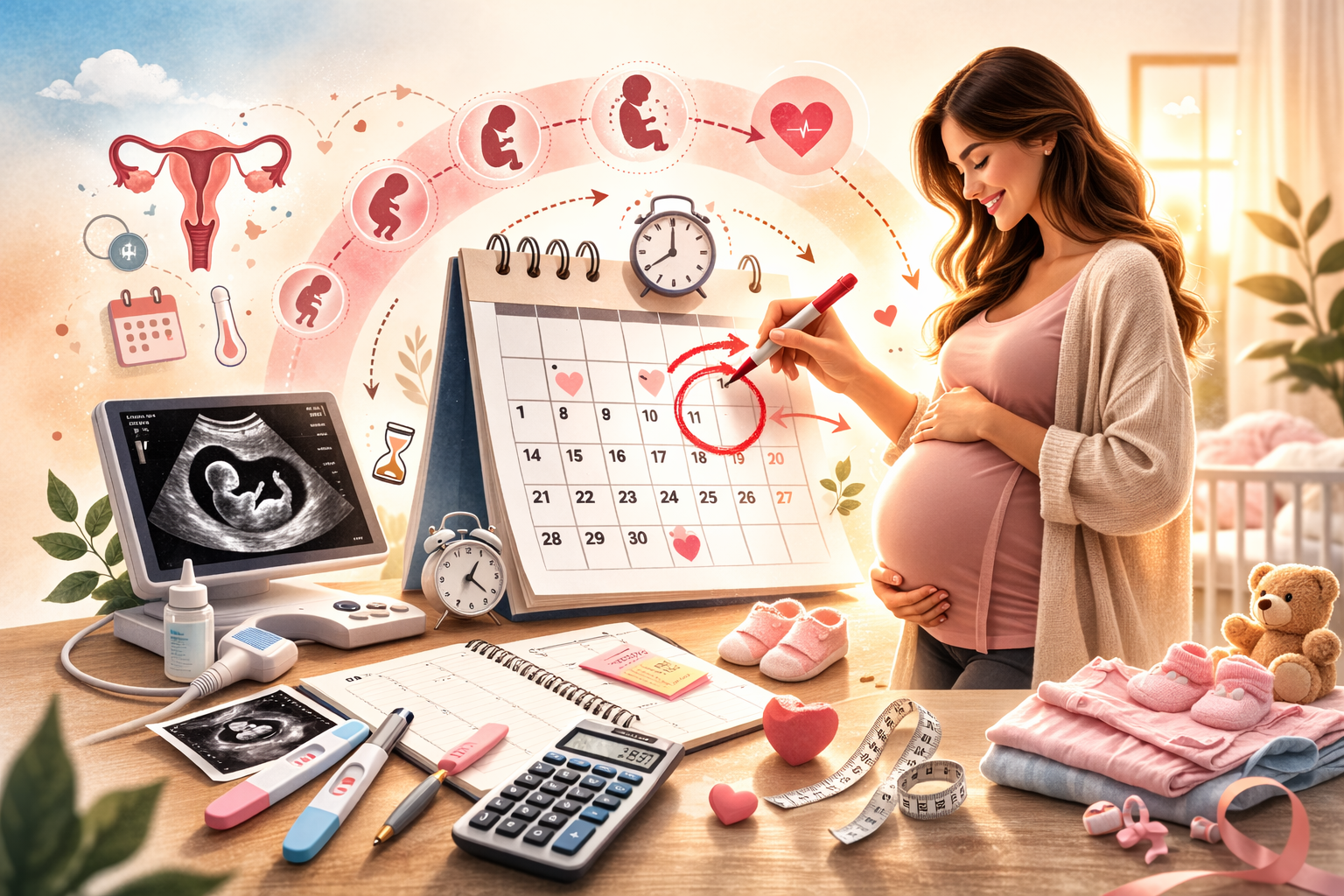
One of the first questions many people ask after confirming a pregnancy is simple: “When is my baby due?” The estimated due date, often called the estimated delivery date (EDD), helps track pregnancy progress, plan prenatal appointments, and understand fetal development milestones.
Although it may seem like there is a single exact date, pregnancy due dates are actually estimates based on standardized medical calculations. In this guide, you will learn how to calculate your pregnancy due date using common methods such as the last menstrual period (LMP), ovulation date, conception timing, and ultrasound measurements.
If you prefer a structured calculation, you can use our Pregnancy Due Date Calculator to generate an estimated delivery date based on widely recognized formulas. This article is for educational purposes only and does not replace professional medical consultation.
Understanding the Basics of Pregnancy Dating
Pregnancy is typically calculated as lasting about 40 weeks, or approximately 280 days, from the first day of the last menstrual period. This might feel surprising because conception usually occurs about two weeks after the start of the menstrual cycle. However, medical professionals use LMP as a standardized starting point for consistency.
Related Health Tool Recommendations:


It is important to remember that only a small percentage of babies are born exactly on their due date. Most deliveries occur within a window of about two weeks before or after the estimated date.
Method 1: Calculating Due Date Using the Last Menstrual Period (LMP)
The most common method for estimating a due date is called Naegele’s Rule. This formula adds 280 days (40 weeks) to the first day of your last menstrual period.
Here is a simplified way to calculate:
- Take the first day of your last period
- Add 7 days
- Subtract 3 months
- Add 1 year (if necessary)
For example, if your last menstrual period began on January 10, adding 7 days gives January 17. Subtracting 3 months gives October 17. That becomes your estimated due date.
This method assumes a regular 28-day menstrual cycle. If your cycle length differs significantly, adjustments may be needed.
Method 2: Calculating from Ovulation or Conception Date
If you know the exact date of ovulation or conception, you can calculate your due date by adding 266 days (38 weeks) from that date. This method may be more accurate for individuals who track ovulation using temperature charts or ovulation predictor kits.
Understanding your fertile window can help refine this estimate. If you are tracking fertility patterns, our Ovulation & Fertility Calculator can help identify probable ovulation timing.
Method 3: Ultrasound-Based Due Date Estimation
Early pregnancy ultrasounds measure the size of the embryo or fetus to estimate gestational age. First-trimester ultrasounds are generally considered highly accurate for dating purposes, especially if menstrual cycles are irregular or uncertain.
Ultrasound dating is often used to confirm or adjust an estimated due date calculated from LMP.
Why Due Dates Are Estimates, Not Guarantees
Every pregnancy is unique. While 40 weeks is the standard length, full-term pregnancy ranges from 37 to 42 weeks. Factors such as cycle length variability, ovulation timing, and natural biological differences influence delivery timing.
Read Also:- How to Calculate Your Pregnancy Due Date at Home (Simple & Accurate Method Every Mom Should Know)
- Why Your Due Date Might Be Wrong: 7 Hidden Factors That Affect Your Baby’s Arrival
- Naegele’s Rule vs Ultrasound: Which Due Date Calculation Is More Accurate? (Doctor-Backed Guide)
- When Will My Baby Be Born? Early Signs Your Due Date Is Near (Don’t Ignore These Signals)
- 5 Common Due Date Calculation Mistakes Every Pregnant Woman Should Avoid (No.3 Is Critical)
The due date serves as a guideline for monitoring fetal growth and prenatal care scheduling rather than a fixed appointment.
Gestational Age vs Fetal Age
Gestational age is measured from the first day of the last menstrual period. Fetal age, however, refers to the time since actual conception, which is typically about two weeks later.
This difference explains why pregnancy is counted as 40 weeks even though fetal development occurs over approximately 38 weeks.
How Cycle Length Affects Due Date
If your menstrual cycle is longer or shorter than 28 days, ovulation likely occurs earlier or later than day 14. This shift can impact due date accuracy if calculated strictly using standard formulas.
Individuals with irregular cycles may benefit from early ultrasound dating for improved accuracy.
Common Questions About Pregnancy Due Dates
Can stress affect my due date? Stress does not change gestational calculations, but overall health and pregnancy conditions can influence delivery timing.
What if I do not remember my last period? Ultrasound dating becomes especially important when LMP is uncertain.
Is it normal to deliver before or after the due date? Yes. Many healthy pregnancies deliver slightly before or after the estimated date.
Tracking Pregnancy by Weeks and Trimesters
Pregnancy is divided into three trimesters:
- First trimester: Weeks 1–13
- Second trimester: Weeks 14–27
- Third trimester: Weeks 28–40
Knowing your gestational week helps you understand developmental milestones and recommended prenatal care stages.
Using Online Tools for Structured Estimation
Digital tools simplify due date estimation by automating standardized formulas. If you want a quick calculation, our Pregnancy Due Date Calculator provides an estimate based on commonly used medical dating guidelines.
Remember, online tools are informational and do not replace medical evaluation.
What Happens After Your Due Date?
If pregnancy extends beyond 40 weeks, healthcare providers may monitor fetal well-being more closely. Extended pregnancies are sometimes referred to as post-term if they go beyond 42 weeks.
Monitoring typically includes ultrasound evaluations and fetal heart rate assessments to ensure ongoing health.
Healthy Pregnancy Planning Tips
While calculating your due date provides a timeline, maintaining overall wellness throughout pregnancy remains essential. Balanced nutrition, adequate hydration, and regular prenatal visits support healthy development.
Proper calorie planning can also play a role in maternal health. Structured nutrition planning tools may help support general dietary awareness during pregnancy, though specific needs should always be discussed with a qualified professional.
Final Thoughts
Calculating your pregnancy due date is an important step in understanding your pregnancy timeline. Whether you use the last menstrual period method, ovulation tracking, or ultrasound confirmation, remember that the estimated date is a guideline rather than a guarantee.
Pregnancy is a dynamic biological process influenced by many individual factors. Online tools and educational guides can provide clarity, but personal medical advice should always come from licensed healthcare providers.
This content is provided for informational and educational purposes only. TeknoSehat is not a medical provider and does not offer diagnosis or treatment. Always consult a qualified healthcare professional for personalized medical guidance.

Popular Posts



Popular Tools