What Is a Healthy BMI for Men and Women? A Practical Guide
When people search for a healthy weight range, they often encounter the term Body Mass Index (BMI). But what does BMI actually mean? Is the healthy range the same for men and women? And how should you interpret the number without misunderstanding it?
This practical guide explains what a healthy BMI looks like for adult men and women, how it is calculated, what the standard ranges mean, and how to use BMI responsibly as part of a balanced health approach.
Disclaimer: This content is for educational and informational purposes only. It does not provide medical advice, diagnosis, or treatment. Always consult a qualified healthcare professional regarding personal health concerns.
What Is BMI?
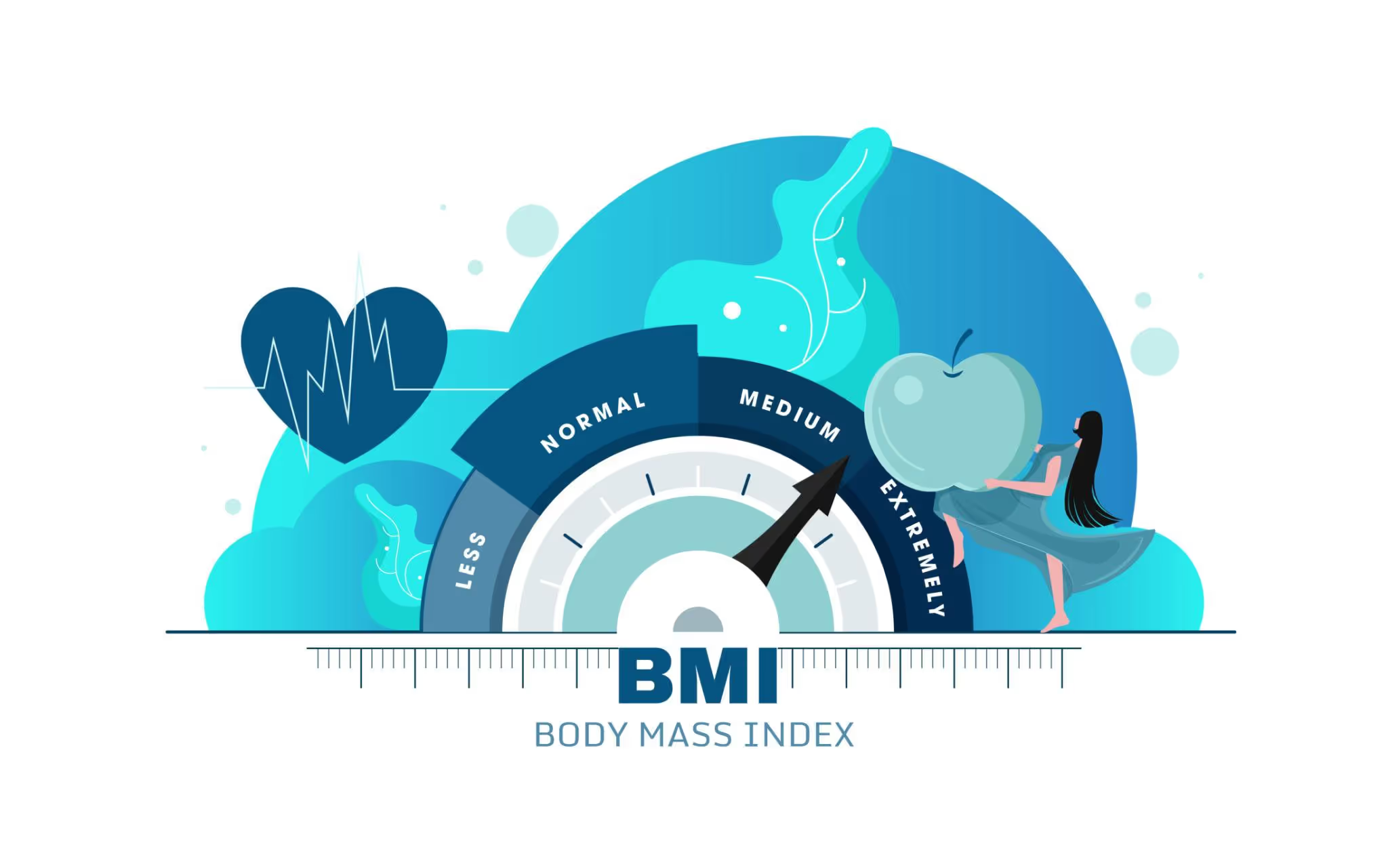
Body Mass Index (BMI) is a numerical value derived from your height and weight. It is widely used as a screening tool to categorize weight status in adults.
Metric formula:
BMI = weight (kg) ÷ height (m²)
Imperial formula:
BMI = (weight in pounds ÷ height in inches²) × 703
Although BMI does not directly measure body fat, it provides a quick estimation that correlates with health risk patterns in large populations.
Standard BMI Categories for Adults
| BMI Range | Category |
|---|---|
| Below 18.5 | Underweight |
| 18.5 – 24.9 | Healthy Weight |
| 25.0 – 29.9 | Overweight |
| 30.0 and above | Obesity |
For most adults aged 20 and older, a BMI between 18.5 and 24.9 is considered within the healthy range.
Is a Healthy BMI the Same for Men and Women?
The official BMI categories apply equally to adult men and women. However, biological differences influence how body weight is distributed.
Key differences include:
- Women naturally have a higher essential body fat percentage.
- Men generally have higher lean muscle mass.
- Hormonal variations affect body composition.
Because muscle weighs more than fat, physically active individuals—especially men—may have a BMI slightly above 25 while maintaining a healthy body composition.
Healthy BMI for Men
For most adult men, a BMI between 18.5 and 24.9 is considered healthy. However, men with significant muscle mass may fall slightly above this range without increased health risk.
Waist circumference is often used alongside BMI because abdominal fat is linked to metabolic risk factors.
Healthy BMI for Women
For most adult women, the healthy BMI range also falls between 18.5 and 24.9. Natural life stages such as pregnancy, postpartum recovery, and menopause may temporarily influence weight changes.
It is important to interpret BMI in context rather than comparing numbers based on appearance standards or social trends.
Why BMI Is Widely Used
BMI remains popular because it is:
- Simple to calculate
- Cost-effective
- Useful for large-scale health assessments
- Helpful as an initial screening tool
Public health organizations use BMI to track trends in overweight and obesity worldwide.
Limitations of BMI
While useful, BMI has limitations:
- It does not measure body fat percentage directly.
- It cannot distinguish between muscle and fat mass.
- It does not reflect fat distribution.
- It may not account for ethnic variations in health risk.
For this reason, BMI should be interpreted alongside other health indicators.
How to Calculate Your BMI Easily
If you prefer not to calculate manually, you can use our free and simple online tool to check your BMI instantly:
This BMI calculator provides a quick estimate and categorizes your result according to widely recognized international standards.
BMI and Overall Health
BMI is only one part of a broader health picture. Other important indicators include:
- Blood pressure levels
- Blood sugar levels
- Lipid profile
- Physical activity habits
- Sleep quality
- Stress management
Research suggests that both very low BMI and very high BMI are associated with increased health risks. However, lifestyle factors significantly influence long-term outcomes.
Practical Steps to Maintain a Healthy BMI
1. Balanced Nutrition
Focus on whole foods, lean proteins, fiber-rich vegetables, fruits, and healthy fats. Avoid extreme or restrictive dieting.
2. Regular Physical Activity
Combine strength training and cardiovascular exercise to maintain muscle mass and metabolic health.
3. Adequate Sleep
Sleep plays a critical role in appetite regulation and overall well-being.
4. Sustainable Habits
Long-term consistency is more effective than short-term rapid weight changes.
Frequently Asked Questions
Is a BMI of 23 considered healthy?
Yes. A BMI of 23 falls within the standard healthy weight range for adults.
Can someone be healthy with a BMI over 25?
In some cases, yes—particularly if increased BMI is due to higher muscle mass. A healthcare professional can provide personalized evaluation.
Is BMI accurate for athletes?
Not always. Athletes may benefit from body fat percentage assessments instead of relying solely on BMI.
When to Consult a Professional
You may consider speaking with a qualified healthcare provider if:
- Your BMI is below 18.5 or above 30
- You experience unexplained weight changes
- You have underlying health conditions
- You are pregnant or recently postpartum
Final Thoughts
A healthy BMI for men and women generally falls between 18.5 and 24.9. While BMI is a useful screening tool, it should not be viewed as the sole measure of health.
Instead of focusing exclusively on a number, prioritize sustainable lifestyle habits that support physical and mental well-being.
This article is intended for general informational purposes only and should not be interpreted as medical advice.

Popular Posts





Popular Tools